Leo’s Lesson One 🐾
Let’s face it…life is all about changes, right? Just look at the penny…well, money changes too!
Most of us grow up using money way before we even understand it (if we ever really do). We’re told to earn it, save it, and spend it…but rarely are we taught what money actually is or why it behaves the way it does. Many adults don’t feel confident explaining basic money concepts to their children; not because they don’t care, but because no one ever explained it clearly to them either (probably because they didn’t understand it too).
That’s where Leo comes in! 🐾
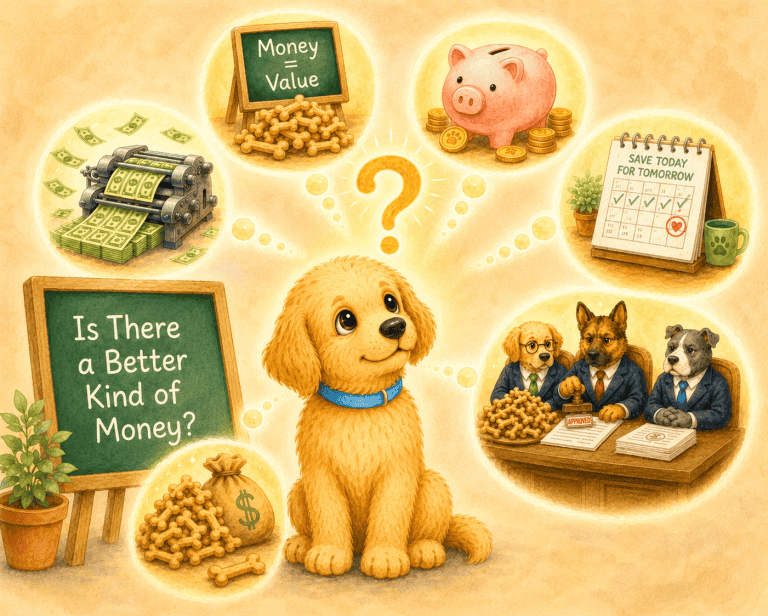
Leo is a curious puppy who started asking simple questions about money…the same questions many adults still wonder about today. This lesson is the very beginning of his journey and yours. No pressure. No jargon. Just a calm, friendly explanation to understand what is money and what it isn’t, why it exists, and why learning about it can help you feel more confident about your financial future.
Let’s start at the beginning…together.
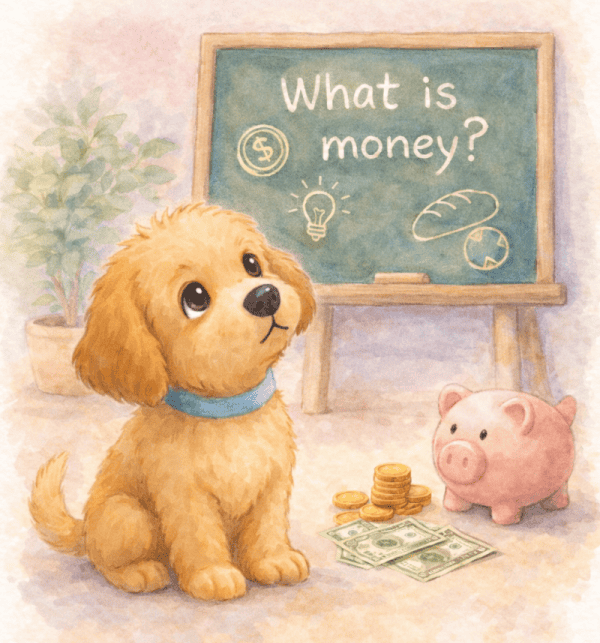
So What Is Money?!
At its core, money is a tool.
(No, not this kind of tool!)
Money is something people use so they can trade something of value with each other. It’s not the same as value, though, it’s just a way to help people exchange things like goods or services.
For example:
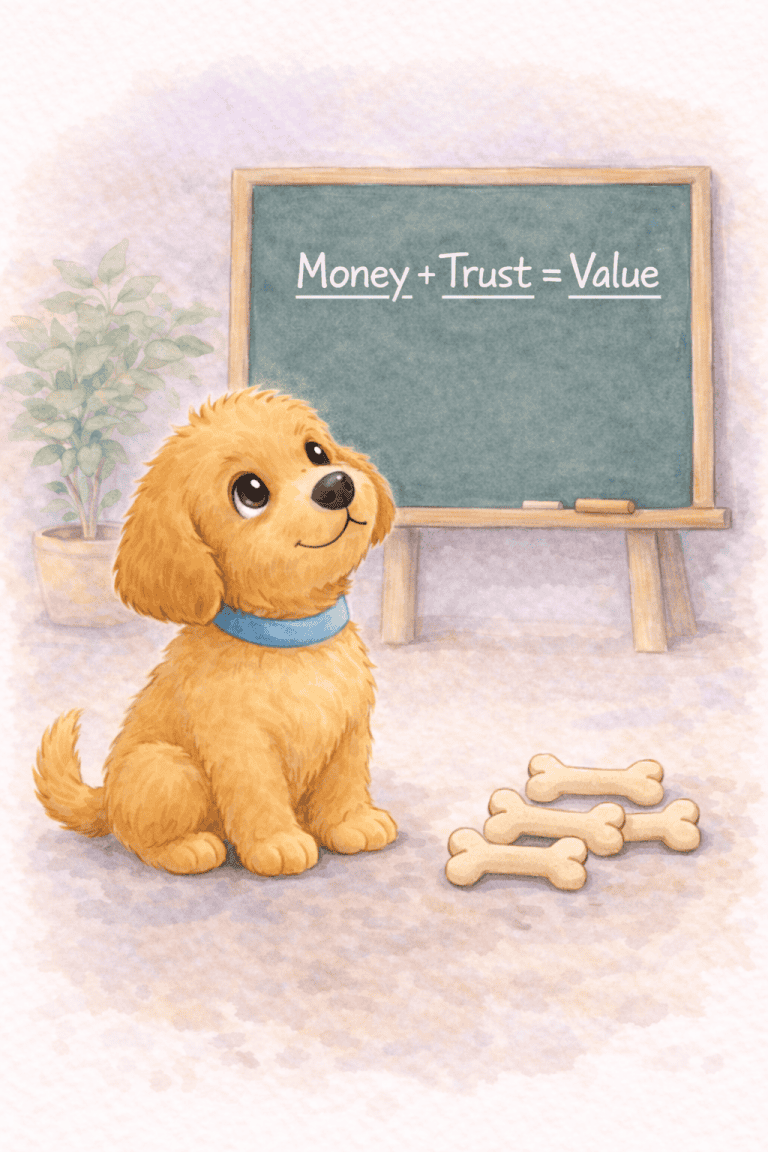
Money itself isn’t valuable. It’s valuable because people trust it and agree to use it.
The idea of agreement and trust is very important and we’ll come back to it later.
Why Do We Use Money?
Before money existed, people traded things like rocks and other things directly. This was called bartering.
Imagine Leo wants a bone, but all he has is a toy. He finds a dog with a bone, but that dog doesn’t want the toy, he wants food instead. It makes it difficult for him to trade with that dog. Money makes this easier.
Instead of trading item-for-item, money allows you to:
Money doesn’t create value, it helps move value.
The Three Main Reasons for Money
Money does three important jobs:
1. Money Helps Us Trade Things (this is called a “Medium of Exchange”)
Money allows people to buy and sell things without bartering. This makes everyday life simpler and faster. Leo wants to walk into a store without having to hope he has the right thing and the right amount of that thing to barter every time he needs something.
Money is the agreed upon “trade” that helps us get things we need.
2. Money Helps Us Measure Prices (this is called a “Unit of Account”)
Money gives things a price so we can compare them. It helps us answer questions like:
When people say money is a unit of account, they’re really saying this:
Money is the measuring stick we use to talk about value. Just like we use inches to measure length or minutes to measure time, we use money to measure how much things cost. Money helps us put numbers on things so we can compare them.
A Leo Example: 🐾
Imagine Leo walks into a store. He sees:
Without money, how would Leo know which one “costs more”? He might think:
That can get confusing very fast. Money solves this problem. Instead of guessing, everything gets a price. Now Leo can see:
Suddenly, comparing things becomes easy!
Why Prices Matter
Prices help answer important everyday questions, like:
Money doesn’t tell us what we should buy…it just helps us see the differences clearly so we can make an informed decision. That’s what a unit of account does.
Money Isn’t Value…It Measures Value
This part is important. Money itself is not value. It’s just a way to measure value.
Think about a thermometer. A thermometer doesn’t create heat, it just tells you how hot or cold something is. Money works the same way…it doesn’t create value, it helps us measure it.
When the Measuring Stick Changes
Here’s where things get interesting (and where we’ll dive deeper later in Leo’s journey). If money changes over time…if prices go up and the same amount of money buys less, then the measuring stick is changing. That can make it harder and more confusing to compare things:
This is one reason people sometimes feel confused or frustrated about money. The numbers are still there, but the meaning and value shifts.
Why Understanding This Helps
When we understand money as a unit of account and know that it is being measured:
It helps us stay calm, confident, and informed. And that’s exactly what Leo is learning to do. 🐾
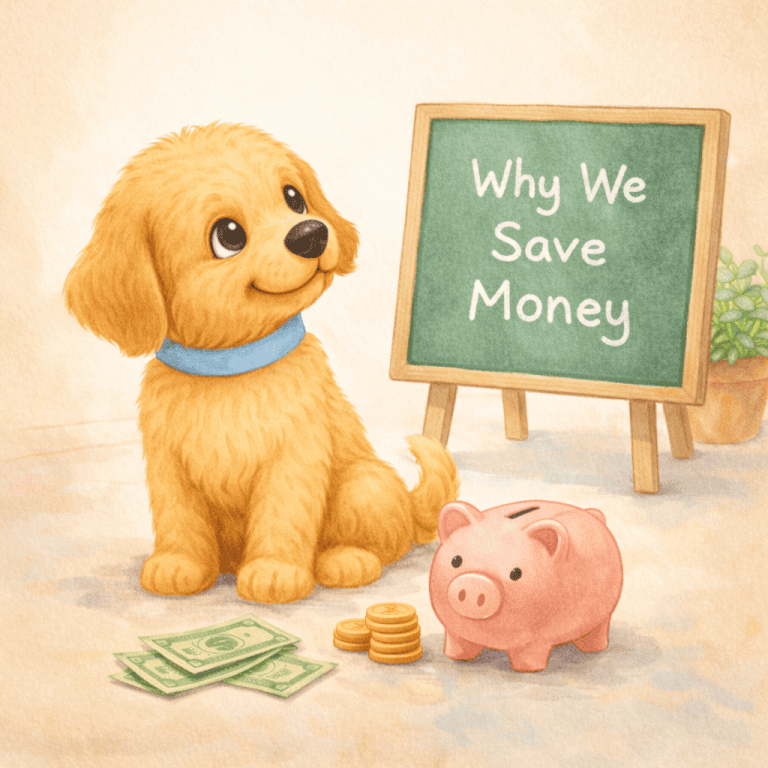
3. Money Helps Us Save (this is called a “Store of Value”)
Money lets us save today so we can use it later, but as we’ll learn in future lessons, money doesn’t always keep its same value forever. But if Leo buries 10 bones today to save for his future, those 10 bones won’t be worth or valued as much in the future. There are a lot of things that cause this and make it challenging to make plans, but awareness is the first step.
So, money helps us trade things, measure the price of things, and money helps us save up and prepare for our future! These three reasons are why money exists!
Where Does Money Come From?
Money used to be tied to physical things like gold or silver. These were hard to find, hard to copy, and hard to transport, but they were trusted.
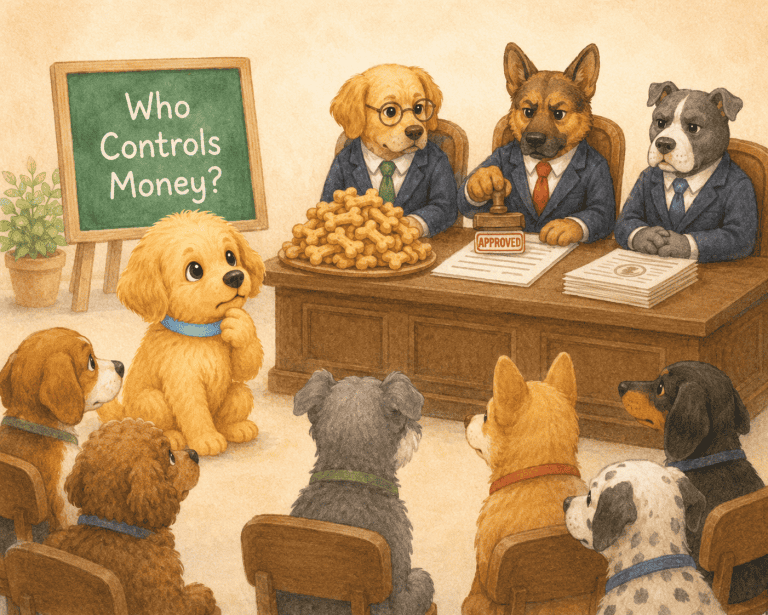
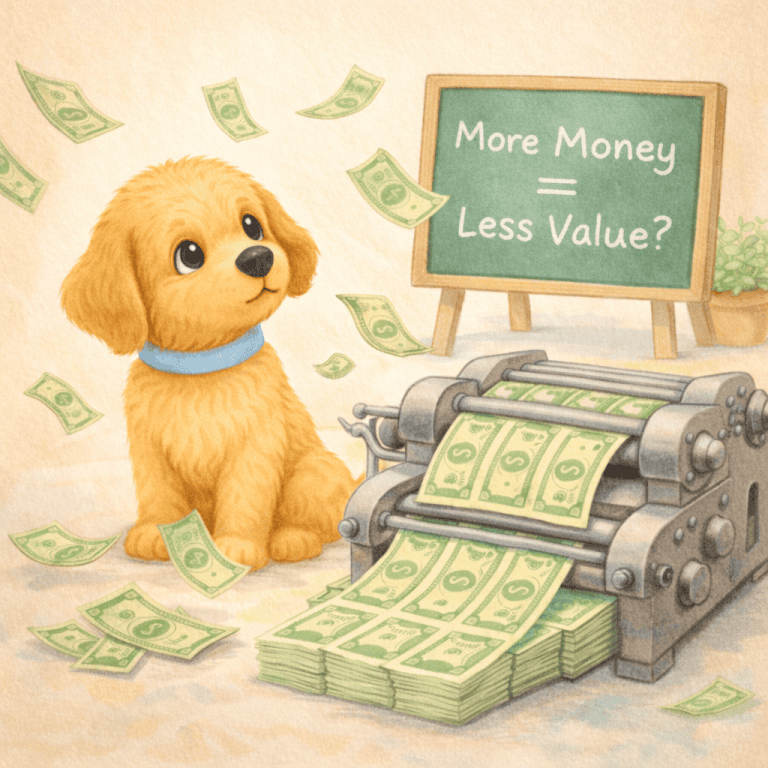
Today, most money is created by governments and “central banks.” It exists mostly as numbers on screens rather than physical bills or coins. Yes, they can print more money to make more numbers on a screen, but that doesn’t help (it actually hurts!).
The money system works because people trust it and because laws require it to be accepted.
Trust plays a big role in money. When we lose trust, money changes. Understanding this helps explain why people sometimes look for alternatives, which is something we’ll explore a little later in Leo’s journey (and yours!).
Why Does Money Change Over Time?
Have you noticed that things cost more than they used to? That’s because money can lose “purchasing power” over time. This is what is referred to as inflation. Just look at the penny! One day we could use it as a unit of exchange, but now we can’t because it’s not worth what it once was. The penny isn’t even worth the amount of money it costs to produce it! It also way too many pennies now to buy anything, so it’s just not “worth” it.
What matters is this:
Learning to notice these changes shouldn’t be scary. It’s meant to help people feel informed instead of surprised or shocked.
Why Learning About Money Early Matters
Stress about money comes from confusion and misunderstanding, not from a lack of effort. Don’t be disappointed, you’re learning now and that’s what matters.
When people (and families) understand money better:
Learning about money today doesn’t mean making big decisions now. It simply means building awareness for your future…and awareness is empowering!
Final Thoughts…
Money doesn’t have to be mysterious or scary or stressful. Learning about it doesn’t have to be complicated.
When we understand what money is (and what it isn’t!) we start asking better questions., we notice patterns, we feel more confident, and most importantly, we give ourselves permission to learn at our own pace. When children learn early about this, they are equipped to make better decisions about money and their financial future. This is just the beginning of Leo’s journey (and yours!).
🐾 In the next lesson:
Leo explores why money doesn’t always keep its value and what that means in everyday life.