Leo’s Lesson Two 🐾
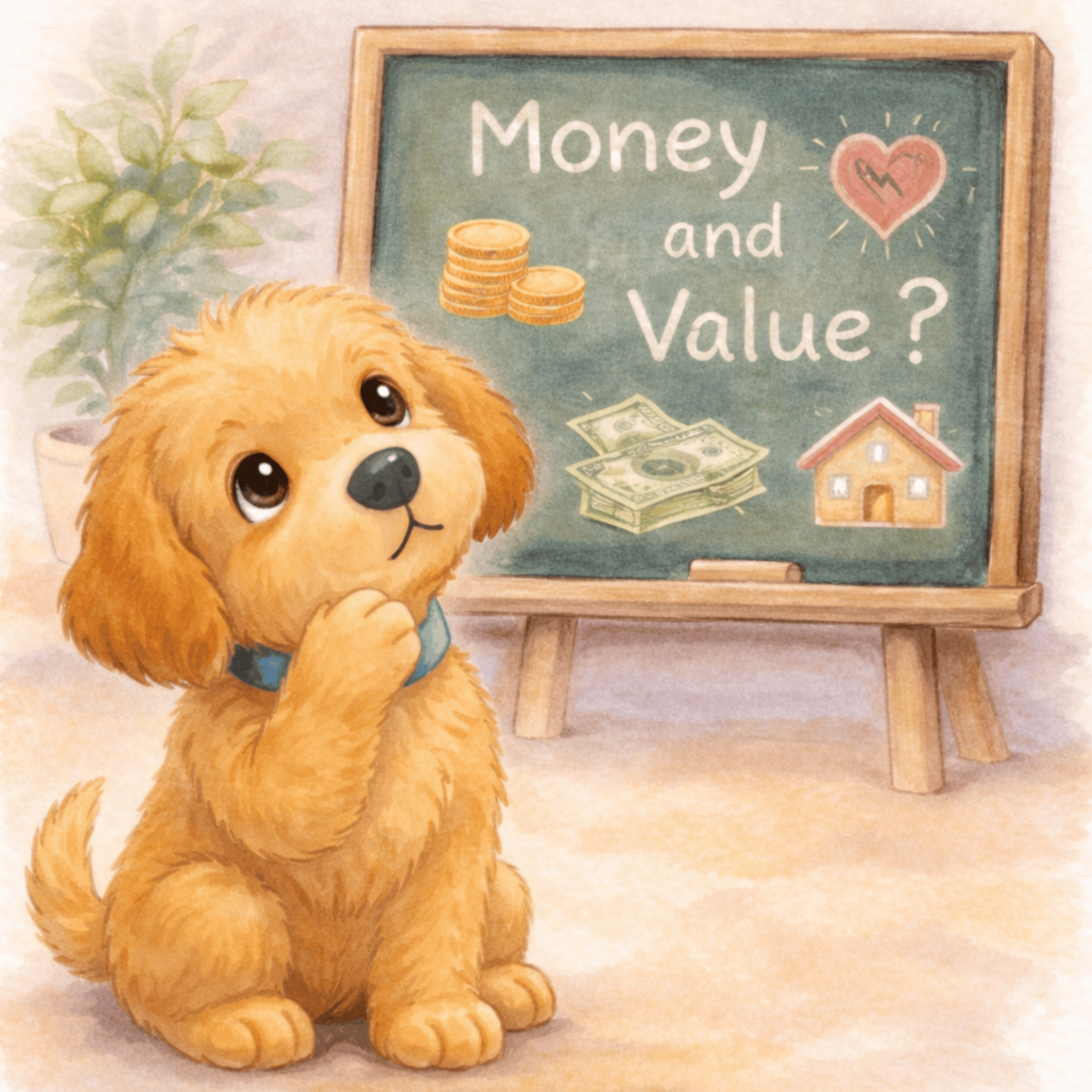
Money and Value Are Not the Same Thing!
Have you noticed that things cost more than they used to? Food is more expensive and eating healthy is almost impossible for some. Toys even cost too much. For many people, this creates confusion, frustration, and worry. This isn’t because you’re bad with money. The value of things change over time and sometimes it’s a good thing and sometimes it’s not…but money and value are not the same thing!
This is called inflation…that’s what Leo is learning now… 🐾
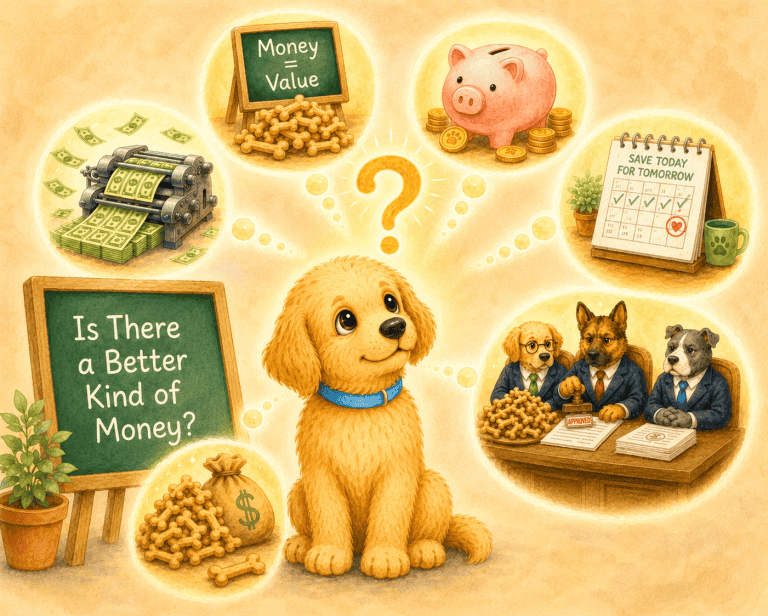
In the last lesson, Leo discovered that money is a tool. In this lesson, he’s starting to notice something important: money doesn’t always keep its value over time. The same amount of money bought more in the past and buys less in the future.
This lesson is to help you understand how money and value work together, and why learning this concept helps everyday life feel calmer, clearer, and more manageable. Let’s explore this together! 🐾
What Do We Mean by “Value”?
Before we talk more about money, we need to talk about value. Value is about usefulness, importance, or benefit. It’s about what something does for us.
For example:
Value is the importance we put on something. It exists because we care about things, need things, or rely on things.
Different people can put a different value the same thing. One person might value time more than money. Another person might value security more than convenience. Value isn’t fixed…it’s personal and circumstantial. That’s an important thing to remember!
Money Is Not Value…It Measures Value
This is one of the most important ideas Leo learns: Money is not value. Money is a way to measure value.
Think about this…
Money works the same way. It gives things a number so we can compare them, plan, and exchange with others. When something costs $5 and something else costs $50, money helps us see the difference quickly. But the number itself doesn’t create value, it reflects what people are willing to agree on at that moment. When we confuse money with value, money feels emotional and stressful. When we understand money as a measuring tool, things feel clearer.
Why Money Doesn’t Always Keep Its Value
Here’s where Leo starts noticing something curious. If money measures value, why does the same amount of money buy less over time? Why does yesterday’s money feel “smaller” today? The answer is what’s called “purchasing power,” which just means how much your money can actually buy. When we lose purchasing power, money loses its value (even if the thing you’re buying is the same “price”)!
This doesn’t happen all at once. It happens slowly, over years. That’s why it feels confusing and a little shocking when you go to buy something you haven’t in a while and notice the big price difference.
Same Money, Different Results 🐾
Imagine Leo goes to the pet store.
Then:
Now:
The money didn’t change physically and the treat is the same type and recipe. The only thing that changed was the relationship between money and value.
This makes Leo more curious…and curiosity is the key to understanding money!
So What Causes Money to Lose Value?!
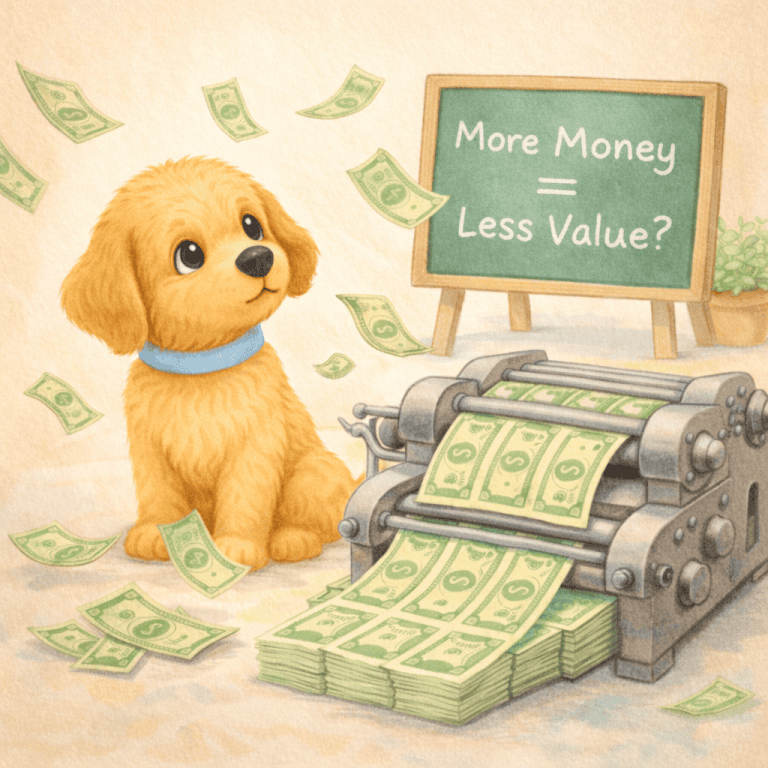
Money loses its value when more money exists than the value it’s meant to measure.
That might sound complicated, but the idea is simple.
If there are more dollars, but the same amount of food, housing, or services, each dollar represents a smaller piece of the total value available.
This can happen for many reasons:
The most important takeaway isn’t the cause; it’s the effect. When money increases faster than value, money measures less on the “ruler.”
So What Exactly Is Inflation?!
The word we use for money losing purchasing power is inflation.
Inflation simply means that as prices rise, money buys less than it used to.
Inflation doesn’t happen all of a sudden. It happens slowly and isn’t easy to notice. It’s a a gradual process and understanding it helps us prepare for it and get ahead of it.
How Inflation Works In Our Everyday Life
Inflation shows up in small, everyday ways:
This is very frustrating, especially for people and families trying their best.
But it’s important to understand that inflation is the effect of many changes and influences that are out of our control. Understanding inflation helps us stop being frustrated, start asking better questions, and helps us plan for our financial future.
Money, Trust, and Value
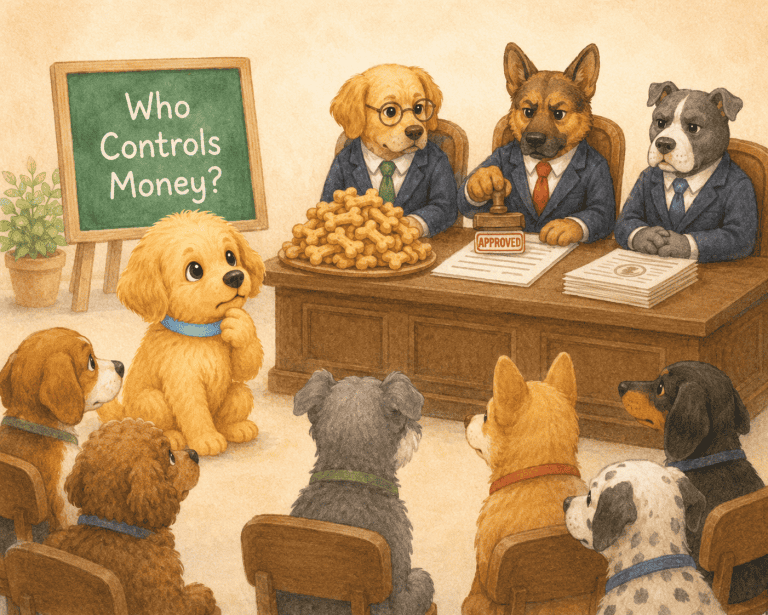
Money works because people trust it.
When trust changes, money changes. That’s why throughout history we have looked for different ways to store value, from gold to land to other systems (like rocks!). This isn’t a new concept, it’s always been part of the system. Understanding trust helps explain why money evolves over time.
Accepting Money’s Reality
It’s can be embarrassing to admit we don’t fully understand money or inflation.
But the truth is:
Not knowing isn’t your fault. Learning at any age will help you prepare for your financial future.
What Understanding Money and Value Gives You
When people understand money and value, something shifts.
You don’t need to know everything about money…you just need to understand it better. Understanding creates confidence and empowerment.
How Families Can Talk About Money and Inflation Together
You don’t need big lectures or complicated charts!
You can simply:
When discussing this with our families, we need less fear and more clarity. This builds our confidence and helps us plan better for generational wealth!
Final Thoughts: Money Changes and Understanding Helps Us Change Too!
Money and value are connected, but they aren’t the same.
Money doesn’t always keep its value. Inflation slowly changes what our money can buy. Understanding this helps us to feel confident instead of frustrated and surprised. Leo is learning that changing our perspective about money is empowering and helps us plan better.
🐾 In the next lesson:
Leo the Puppy explores why trust matters so much in money and what happens when we start asking better questions.